
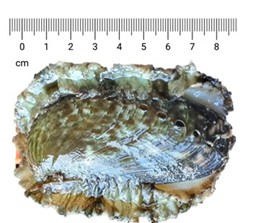
Yogyakarta, July 18, 2025 — Sri Fatmah Sari, a doctoral student from the 2022 even-semester cohort of the Biotechnology Doctoral Study Program at the Graduate School of Universitas Gadjah Mada, has successfully completed her comprehensive examination. Her dissertation proposal, titled “Identification of Anti-inflammatory Peptides from Abalone (Haliotis asinina) Viscera Protein Hydrolysate”, focuses on discovering bioactive compounds from underutilized marine resources—particularly the viscera of the tropical abalone species Haliotis asinina—to develop new, safe alternatives for anti-inflammatory therapies.
Abalone is a high-value marine mollusk belonging to the class Gastropoda and is recognized globally for its nutritional and economic potential. In Indonesia, H. asinina is widely distributed across regions such as the Seribu Islands, Lombok, Madura, Maluku, Papua, and Sulawesi. While its edible meat is well appreciated for its umami flavor, high protein, and low cholesterol content, the processing of abalone often results in large volumes of underutilized byproducts, particularly viscera, which account for up to 25% of the organism’s weight. Rich in protein, this byproduct has promising potential as a novel source of bioactive peptides.
Sri’s research is based on the growing interest in bioactive peptides (BAPs) as therapeutic agents with high target selectivity, low toxicity, and good bioavailability. Among their many activities, anti-inflammatory peptides (AIPs) are of particular interest due to their potential to address chronic inflammation—a key contributor to diseases such as cardiovascular disorders, diabetes, chronic kidney disease, and even neurological and psychiatric conditions.
The study combines two strategic approaches: an in silico-driven exploration, involving proteomic analysis, peptide prediction, docking simulations (against TLR4, IKKβ, and COX-2), and peptide synthesis; and an activity-guided strategy, including stepwise purification, anti-inflammatory activity screening in LPS-induced RAW 264.7 macrophage cells, and final identification of active peptide sequences using LC-HRMS and bioinformatics. Synthetic peptides with the most potent in vitro effects are further validated through expression analysis of inflammatory markers such as COX-2 and TNF-α.
Supervised by Prof. Tri Joko Raharjo, M.Si., Ph.D., with co-promoters Prof. Dr. Ir. Alim Isnansetyo and Dr. Tri Rini Nuringtyas, S.Si., M.Sc., Sri’s work was evaluated by examiners Dr.biol.hom. Nastiti Wijayanti, S.Si., M.Si. and Respati Tri Swasono, S.Si., M.Phil., Ph.D.
Her research underscores the importance of Indonesia’s rich marine biodiversity as a source of high-value bioactive compounds. It supports local resource utilization, promotes the zero-waste concept in seafood processing, and offers alternatives to conventional anti-inflammatory drugs, which often carry significant side effects.
This study contributes to several Sustainable Development Goals (SDGs). It addresses SDG 3 (Good Health and Well-being) by identifying safer, natural-based therapeutic alternatives for inflammatory diseases; SDG 12 (Responsible Consumption and Production) by valorizing seafood processing byproducts and supporting waste reduction in the marine food industry; and SDG 14 (Life Below Water) by promoting sustainable use of marine biodiversity through bioprospecting of underutilized species.