

Name: Putu Cri Devischa Gallantiswara
Email: putu.cri.d@ugm.ac.id
Promoter: Prof. Dr. Ir. Siti Subandyah, M.Agr.Sc.
Co-Promoter 1: Prof. Dr. drh. Wayan Tunas Artama
Co-Promoter 2: Dr. Windi Muziasari
Research Title: Antibiotic Resistance Gene Monitoring in the Agricultural Environment in Java, Indonesia
Research Abstract:
Read Abstract
The use of antimicrobial agent in livestock farm has been a common strategy for several purposes including bacterial, protozoal, and fungal infection treatment, and growth promotor. Antibiotics, the most common antimicrobial agent use in livestock, are commonly mixed with the feeds for bacterial infection treatment or as a growth promotor. This accelerates the emerging of antibiotic resistant bacteria in the animal’s gut microbiomes. When the animal manures are applied to the soil, it is not only antibiotic compounds, but also considerable numbers of antibiotic-resistant bacteria, antibiotic resistance genes (ARGs), and associated mobile genetic elements (MGEs) are introduced to soil. Several kinds of antimicrobial agents also used for managing the plant health including fungicides, bactericides (antibacterials), insecticides, and pesticides. This phenomenon can drive those antimicrobial residues from animal and plant to agriculture sector. This study is designed to characterize the presence and the abundance of targeted ARGs and MGEs, monitor the gene distribution, and study the gene’s prevalence in agricultural environment using culture independent and molecular microbiology technology including conventional PCR, qPCR, a high throughput qPCR (HTqPCR), and the SmartChip qPCR system. Three kinds of samples including animal feces, animal manure, and plant cultivating soil are collected from several agricultural farms in Yogyakarta, consisting of chili, shallot, and rice field. The study will be divided into three stages: (1) profile of the ARGs and MGEs in Integrated Farming Agrotechnology Innovation Center, Universitas Gadjah Mada, Yogyakarta and Java, Indonesia (2) design a primer set to target the important ARGs and MGEs according to the first stage result through an in silico analysis and (3) study the prevalence of ARGs and MGEs in Yogyakarta agricultural environment based on designed and controlled farming systems in Bantul district, Yogyakarta.
Seminars / Conferences Attended:
- World Microbe Forum, 20-24 June 2021, Online Worldwide
- The 6th International Symposium Association of Japan-Indonesia Veterinary Education 2022 (11 Febtuary 2022)

Name: Sri Fatmah Sari
Email: srifatmahsari1988@mail.ugm.ac.id
Promoter: Prof. Tri Joko Raharjo
Co-Promoter 1: Prof Alim Isnansetyo
Co-Promoter 2: Dr. Tri Rini Nuringtyas
Research Title: Abalone Haliotis asinine Peptide as Anti inflammation Agent

Name: Zainab
Email: zainabmsiapt@mail.ugm.ac.id
Promoter: Prof. Dr. Abdul Rohman, SF., M.Si., Apt.
Co-Promoter 1: Respati Tri Swasono, S.Si, M.Phil, Ph.
Co-Promoter 2: Sari Darmasiwi, S.Si., M.Biotech., Ph.D.
Research Title: Secondary Metabolite Profile of the Fingerroot Rhyzome (Boesenbergia pandurata (Roxb.) Schlechter.) as Antioxidant and Antibacterial Using a Chemometric Approach
Research Abstract:
Read Abstract
The rhizome of fingerroot (Boesenbergia pandurata (Roxb.) Schlechter.) has been known to have antimicrobial, antiviral, anticancer, antioxidant, hepatoprotective activity and has long been used as a cooking spice in the community. The chemical contents contained in the fingerroot rhizome include essential oils, flavonoids, phenolic compounds and prenyl propanoids. This research was conducted with the aim of determining the secondary metabolite profile of fingerroot rhizome as an antioxidant and antibacterial using a chemometric approach.
The essential oil of the fingerroot rhizome is extracted by steam and water distillation to obtain the essential oil of the fingerroot rhizome (MATK). Fingerroot rhizome powder was extracted with hexane, ethylacetate and ethanol solvents by maceration to obtain hexane extract (HTK), ethylacetate extract (EaTK) and ethanol extract (EtTK). The secondary metabolite profile of MATK was determined using the GC-MC method while the extract profile (HTK, EaTK, EtTK) used LC-MS and FTIR. Antioxidant activity was carried out using the DPPH, FRAB, ABTS methods and antibacterial tests using the microdilution method and the Kirby Bauer agar diffusion method.

Name: Dyah Ayu Widyastuti
Email: dyah.ayu.widyastuti@mail.ugm.ac.id
Promoter: Prof. Dr. Abdul Rohman, S. F., M. Si., Apt.
Co-Promoter 1: Dr. Tri Rini Nuringtyas, S. Si., M. Sc.
Co-Promoter 2: Dr. Djoko Santosa, S. Si., M. Si.
Research Title: In Vitro Culture of Red Ginger (Zingiber officinalle var. rubrum) with Fusarium oxysporum‘s elicitation as Anti-Salmonella sp.
Research Abstract:
Read Abstract
The potential of red ginger as a herbal medicine is supported by the content of secondary metabolite compounds which have been proven to be important in the health sector. The high demand for red ginger in society leads to the need of an appropriate cultivation methods to produce red ginger with optimal secondary metabolite content. Red ginger can be cultured in laboratory using explants in the form of shoots from the rhizome. Increasing the production of secondary metabolite compounds through in vitro culture can be optimized by adding elicitors. Elicitation of in vitro cultures is carried out to increase the production of secondary metabolite compounds by induction of stress through abiotic and biotic factors. One of the endogenous fungi of red ginger in nature is Fusarium oxysporum, so this type has the potential to be used as an elicitor in in vitro cultures. This study aims to identify differences in metabolites produced using a metabolomics approach and genes expressed using a transcriptomics approach in red ginger resulting from in vitro culture with and without elicitors and how their activity is as an anti-Salmonella sp. so that its potential as a herbal medicine can be optimized.
Seminars / Conferences Attended:
- The 6th International Seminar on Agribusiness, Semarang, July 26th 2023
- The 6th International Symposium Association of Japan-Indonesia Veterinary Education 2022 (11 Febtuary 2022)

Name: Siti Fatimah
Email: sitifatimah1977@mail.ugm.ac.id
Promoter: Prof.Abdul Rohman, SF, Apt, M.Si.
Co-Promoter 1: Respati Tri Swasono, S.Si, M.Phil., Ph.D.
Co-Promoter 2: Dr.Tri Rini Nurintyas, S.Si, M.Sc.
Research Title: Characterization of Red Ginger (Zingiber Officinale Var Rubrum) Based on Variations in Growing Altitude: Metabolomics, Antioxidant Activity, and Antibacterial Activity
Research Abstract:
Read Abstract
Traditional medicines are widely used by the community today. One of them is red ginger. Red ginger contains antioxidants that are good for the body, but the antioxidant content is influenced by the altitude at which the plant grows. The purpose of this study is to characterize red ginger based on variations in growing altitude using metabolomics, antioxidant activity, and antibacterial activity. The research will be conducted using an experimental method with four growing altitudes. The metabolomic profile will be measured using FTIR, NMR, and LC-HRMS. Antioxidant activity will be measured using a UV-Vis spectrophotometer. Antibacterial and antibiofilm activity will be measured using the microdilution method.

Name: Dewi Retnaningati
Email: dewi.retnaningati@mail.ugm.ac.id
Promoter: Dr. Yekti Asih Purwestri, M.Si.
Co-Promoter 1: Prof. Dr. Endang Semiarti, M.S., M.Sc.
Co-Promoter 2: Dr. Tri Rini Nuringtyas, S.Si., M.Sc.
Research Title: Transcriptomic Analysis and Genome Editing Related to Anthocyanin Biosynthesis in Cempo Ireng Black Rice Plants using CRISPR/Cas9
Research Abstract:
Read Abstract
Black rice contains higher anthocyanins than other rice and has higher mineral content, ash content, raw fiber, protein, oil and hydrolyzable carbohydrates than white rice. The anthocyanin content has the potential to be an antioxidant, anti-diabetic, anti-cancer, anti-inflammatory, anti-microbial, anti-obesity, and can prevent cardiovascular disease. Black rice “Cempo Ireng” is one of Yogyakarta’s local genetic resources with high nutritional content, lower calorie content than other types of rice, and rich in anthocyanins. Studies related to genes that play a role in anthocyanin biosynthesis and efforts to increase the anthocyanin content in black rice to increase its nutritional value are important. In this dissertation research plan, transcriptomic analysis will be carried out to study genes related to anthocyanin biosynthesis and genome editing related to anthocyanin biosynthesis in Cempo Ireng black rice plants using the CRISPR/Cas9 method.

Name: Rhytia Ayu Christianty Putri
Email: rhytiaayuchristiantyputri@mail.ugm.ac.id
Promoter: Prof. Dr. Ir. Eni Harmayani, MSc.
Co-Promoter 1: Ir. Jaka Widada, M.P., Ph.D.
Co-Promoter 2: Prof. Dr. Ir. Nurliyani, MS., IPM.
Research Title: White Saffron (Curcuma mangga Val) Rhizomes as Prebiotic Candidates and Its Effect on Gut Microbiota Diversity and Immunomodulatory Properties
Research Abstract:
Read Abstract
Rubisco is a protein/enzyme that is claimed to be the most abundant in nature, accounting for nearly 50% (Ellis, 1981). This enzyme plays an important role in the process of photosynthesis to produce glucose, the basic molecule that makes up living things. The main function of Rubisco is to fix CO2 and initiate the enolase process of the RuBP substrate as the initial material for glucose formation (Sharkey, 1998). Rubisco is categorized into three groups based on phylogenetic analysis, namely groups I, II, and III. In its development, proteins were found that structurally have parts similar to Rubisco and are grouped as Rubisco IV.
Rubisco group IV, or Rubisco-like protein (RLP), does not have CO2 fixation capabilities due to substitutions in the amino acid residues on its active site and participates in catalyzing the enolization of RuBP analogues, whose reactions are similar to the enolase reactions catalyzed by Rubisco.
Rahman et al. have successfully isolated and expressed the Rubisco Like Protein (RLP) gene from Chromohalobacter salexigen BKL 5. This bacterium was obtained from a halophilic environment which, based on its phylogenetic evolution, originated in the anoxic era. It is suspected that the active site of this Rubisco family does not experience binding competition between CO2 and O2, thus having high enolase ability.
This research is the first step toward obtaining recombinant Rubisco-Like Protein (RLP), one of the Rubisco family types.
Seminars / Conferences Attended:
- Seminar Nasional Bioteknologi VIII, Yogyakarta, 29 Oktober 2022
- 7th International Conference on Science, Infrastructure Technology
and Regional Development (ICoSITeR) 2022
International Conference on Science, Infrastructure Technology

Name: Irwan Sudarmanto
Email: sudarmantoirwan2016@gmail.com
Promoter: Prof. DR. Drh. Wayan Tunas Artama
Co-Promoter 1: M. Saifur Rohman, SP, MSi, M.Eng., Ph.D
Research Title: Characterization of Recombinant Rubisco Like Protein (RLP) Enzyme From Chromohalobacter salexigen BKL 5
Research Abstract:
Read Abstract
Rubisco is a protein/enzyme which is claimed to be the most abundant in nature, accounting for almost 50% (Ellis, 1981). This enzyme plays an important role in the process of photosynthesis to produce glucose, the basic molecule that makes up living things. The main function of Rubisco is to fix CO2 and initiate the enolase process of the RuBP substrate as the initial material for glucose formation (Sharkey, 1998). Rubisco is categorised into three groups based on phylogenetic analysis, namely groups I, II, and III. In its development, proteins were found that structurally have parts similar to Rubisco and are grouped as Rubisco IV.
Rubisco group IV, or Rubisco-like protein (RLP), does not have CO₂ fixation capabilities due to substitutions in the amino acid residues on its active site and participates in catalysing the enolisation of RuBP analogues, a reaction similar to the enolase reaction catalysed by Rubisco.
Rahman et al. have successfully isolated and expressed the Rubisco Like Protein (RLP) gene from Chromohalobacter salexigen BKL 5. This bacterium was obtained from a halophilic environment which, based on its phylogenetic evolution, originated in the anoxic era. It is suspected that the active site of this Rubisco family does not experience binding competition between CO₂ and O₂, thus having high enolase activity.
This research is the first step towards obtaining recombinant Rubisco-like protein (RLP), a type of Rubisco enzyme family, from halophilic bacteria that can be transformed in mesophilic bacteria such as E. coli, thereby obtaining a new strain that is expected to perform the enolase process very well.
Seminars / Conferences Attended:
- Seminar Nasional Bioteknologi VIII, Yogyakarta, 29 Oktober 2022
- 7th International Conference on Science, Infrastructure Technology
and Regional Development (ICoSITeR) 2022

Name: Hasna Fadlilatul Bidayah
Email: hasnafadlilatul@gmail.com
Promoter: Prof. Dr. Rarastoeti Pratiwi, M.Sc.
Co-Promoter 1: Prof. Dr. Abdul Salam Sofro
Co-Promoter 2: Dr. dr. Teguh Triyono, M.Kes, Sp.PK (K)
Research Title:Molecular Basic of ABO Blood Group System in Indonesia
Research Abstract:
Read Abstract
Among the 45 human blood group systems reported so far, the ABO system was the most important. In the field of transfusion and transplant medicine, the accuracy of ABO blood group typing was clinically important. To characterize ABO blood group status, the gold standard remains serological testing. As an alternative and/or complementary approach to the standard blood group serological typing, genotyping has emerged in immunohematology laboratories for years. To this aim, the molecular determinants driving phenotype variability must be reported on a population-specific basis, to guarantee an optimal identification of the variations by molecular typing. Although widely studied in the Caucasian and East-Asian populations, but the was no molecular data have been generated in Indonesia.
The purpose of this research was to study the ABO system blood group polymorphisms in the Indonesian population, especially related to the molecular study of the ABO gene.
The study begins with standart serological identification to find unusual variants. These sample then be identified by PCR-ASP and PCR-sequencing techniques. Correlation between phenotypes and genotypes were analyzed by functional genetic studies. Allele and genotype frequencies were also estimated. Then new novel population-specific variants/clusters could be determined.
Seminars / Conferences Attended:
- myHAM UMY, 11th May 2024 (The 1st International Conference Muhammadiyah Yogyakarta – Hospital & Healthcare Management)
- ICOPH-TCD UNDIP, 30th-31st July 2024 (International Conference on Public Health for Tropical and Coastal Development)

Name: Yuni Sine
Email: yunisine2588@mail.ugm.ac.id
Promoter: Prof. Widodo, S.P., M.Sc., Ph.D.
Co-Promoter 1: Ir. Donny Widianto, Ph.D.
Co-Promoter 2: Dr. Yekti Asih Purwestri, M.Si.
Research Title: Isolation, Identification and Characterization of Probiotic Candidate Lactic Acid Bacteria from Pigeon Pea Soaked Water (Cajanus cajan L. Millps) as Pigeon Pea Yogurt Fermentation Starter for Health Food
Research Abstract:
Read Abstract
Functional food is defined as food that can have a positive impact on health. Utilization of local food sources for fermented foods that have functional properties is a very good innovation to meet the protein needs of the community. The physiological properties of functional foods are determined by the bioactive components contained in them, such as dietary fiber, inulin, fructooligosaccharides (FOS), antioxidants, polyunsaturated fatty acids (PUFA), prebiotics and probiotics. Lactic acid bacteria (LAB) is one of the key microbes in producing functional food. These bacteria are widespread in nature, associated with humans, animals and plants. In plants, LAB is an autochthonous microbial which is a representation of microbes that have the ability to increase health benefits in plants that are used as food ingredients. Legumes are also a source of LAB, one of the legumes that is widely used as a fermentation substrate is pigeon pea. Prior to the fermentation process, pigeon pea seeds are soaked. At this stage, the LAB population grows significantly, so that LAB with probiotic potential can be isolated. This study aims to isolate LAB from the water soaked with pigeon pea (Cajanus cajan L. Millps.). This study aims to isolate LAB from the water soaked by pigeon pea (C. cajan L. Millps.). The isolated LAB was then applied to pigeon pea milk as a yogurt strater. This research begins with the soaking of pigeon pea, then metagenomic microbial analysis in pigeon pea soaked water is performed, and isolation, identification and characterization of LAB probiotic potential in pigeon pea soaked water is done. After that, LAB in vitro tests will be carried out, followed by the preparation of pigeon pea milk and proximate analysis on pigeon pea milk and pigeon pea yogurt, determination of short chain fatty acids (SCFA), and in vivo tests carried out on experimental rats.
Seminars / Conferences Attended:
- 1st international conference on Agriculture (ICoFTA) 2023, Yogyakarta Indonesia October 21st 2023

Name: Arlinda Puspita Sari
Email: arlindapuspitasari@mail.ugm.ac.id
Promoter: Dr. Yekti Asih Purwestri, S.Si., M.Si.
Co-Promoter 1: Dr. Rikno Harmoko, M.Sc.
Co-Promoter 2: Dr. Tri Rini Nuringtyas, S.Si., M.Sc
Research Title: Increasing Tobacco Resistance to Drought Stress Through Modifying the Trehalose Pathway Using the CRISPR-Cas9 Genome Editing Approach

Name: Ria Suryani
Email: ria.suryani@mail.ugm.ac.id
Promoter: Prof. Widodo, S.P., M.Sc., Ph.D.
Co-Promoter 1: Dr. Tri Rini Nuringtyas, M.Sc.
Research Title: Development of Kefir as a Functional Antihypertensive Drink

Name: Ismail
Email: ismail.farm27@gmail.com
Promoter: Dr. Sylvia Utami Tunjung Pratiwi, S.Si., M.Si.
Co-Promoter 1: Dr. Ema Damayanti, M.Biotech.
Co-Promoter 2: Ir. Jaka Widada, M.P., Ph.D.
Research Title: Exploration of The Potential Metabolyte Compounds of Streptomyces sp. BSE7F in Inhibition Biofilm Candida sp. Through a Multi-Omic Approach

Name: Sista Werdyani
Email: sista.werdyani@mail.ugm.ac.id
Promoter: Prof. Prof. dr. Sofia Mubarika Harjana, M.Med.Sc., Ph.D.
Co-Promoter 1: Prof. Teruna J. Siahaan
Co-Promoter 2: Dewi Kartikawati Paramita, S.Si., M.Si., Ph.D.
Research Title: Methotrexate-cIBR Conjugate and Its Derivatives for Enhancing Anticancer Selectivity: In Silico and In Vitro Studies

Name: Nurhening Yuni Ekowati
Email: nurhening2@gmail.com
Promoter: Dr. Yekti Asih Purwestri, M.Si.
Co-Promoter 1: Dr. Fatimah
Co-Promoter 2: Dr. Tri Rini Nuringtyas, MSc.
Research Title: Genome Editing using CRISPR/Cas9 Targeting the GAD Gene (Glutamic Acid Decarboxylase) to Increase Gamma Aminobutyric Acid (GABA) Content in Rice Plants (Oryza sativa L.)

Name: Medhina Magdalena
Email: medhinamagdalena2018@mail.ugm.ac.id
Promoter: Prof. Ir. Donny Widianto, Ph.D.
Co-Promoter 1: Prof. Ir. Irfan Dwidya Prijambada, M.Eng., Ph.D.
Research Title: Exploration of Fructophilic Yeast and Its Utilization to Improve Ethanol Fermentation Efficiency from Sweet Sorghum Juice
Research Abstract:
Read Abstract
In biofuel production, using raw materials that do not conflict with the food supply and are easy to cultivate, is expected to be a solution to the provision of sustainable raw materials and can reduce production prices. Sweet sorghum can meet feedstock requirements for bioethanol production as it contains relatively high glucose and fructose content. During ethanol fermentation, yeast tends to use glucose first, compared to fructose. As a result, when other nutrients are depleted, fructose residues remain at the end of fermentation. This condition causes fermentation to get sluggish and stuck. Fructophilic yeast was required to solve the fermentation problem. The fructophilic tendency is linked to hexose transporters that transport glucose and fructose into cells. This study aimed to isolate and characterize fructophilic yeasts, investigate the correlation between the Hxt1, Hxt3, and Fsy1 transporters and their fructophilic behavior, and evaluate the capacity of these yeasts to enhance the fermentation efficiency of sweet sorghum juice into ethanol.
Seminars / Conferences Attended:
- International Conference for Green Science and Technology, (provided online by Shizuoka University ), 21- 22 September 2021
- 11th International Seminar of Indonesian Society for Microbiology (11th ISISM), (online, 16-17 November, 2021)

Name: Yeni Indra Kumalasari
Email: yeniindrakumalasari@mail.ugm.ac.id
Promoter: Prof. Ir. Donny Widianto, Ph.D.
Co-Promoter 1: Dr. Yekti Asih Purwestri, S.Si., M.Si.
Research Title: Study and Development of Endophytic Bacteria as Biocontrol Agent of Pathogenic Bacteria in Banana Plants

Name: Dini Achnafani
Email: diniachnafani@ugm.ac.id
Promoter: Muhammad Saifur Rohman, S.P., M.Si., M.Eng, Ph.D.
Co-Promoter 1: Prof. dr. Sofia Mubarika Harjana, M.Med.Sc., Ph.D.
Co-Promoter 2: Dr. Harto Widodo, S.P., M. Biotech.
Research Title: Actinomycetes Utilization as L-Asparaginase Enzyme Producer for Anticancer Drug Therapy Candidates

Name: Ainul Fitria Mahmudah
Email: ainulfitria3030@gmail.com
Promoter: Prof. Himawan Tri Bayu Murti Petrus, S.T., M.E., D.Eng.
Co-Promoter 1: Dr. Yekti Asih Purwestri, S.Si., M.Si.
Co-Promoter 2: Ir. Agus Prasetya, M.Eng. Sc., Ph.D.
Research Title: Analysis of the Effectiveness of a Bacterial Consortium from Red Mud from Tayan for the Extraction of Gallium and REEY (Rare Earth Elements and Yttrium)
Research Abstract:
Read Abstract
The Indonesian government has banned bauxite ore exports starting in June 2023. Although this will reduce the value of bauxite ore exports, it will increase exports of higher-value alumina and aluminum. PT Indonesia Chemical Alumina (ICA) has been producing Chemical Grade Alumina (CGA) from bauxite ore since 2007. High alumina production can cause the accumulation of bauxite waste (red mud) of around 150 million tons per year. The biological approach using bioleaching is the most environmentally friendly method, adds value to the country’s economy, and does not cause other problems. This research will focus on exploring potential bioleaching bacteria from Red Mud by increasing bioleaching activity through bacterial consortia and bioflocculation pre-treatment. The methods that will be used include next-generation sequencing (NGS) testing, bioflocculation testing, bioleaching, non-antagonistic, metal content analysis, 16S rRNA analysis, whole-genome sequencing, biosynthesis pathway approaches (RAST and AntiSMASH), and analysis of the content of organic acids or compounds in the growth medium (GC-MS and C-NMR). The aim of this research is the publication of international journal articles and patents of the Bioleaching Bacteria Consortium, as well as basic information for genetic engineering to increase the activity of bioleaching bacteria.

Name: Maythesya Oktavioni
Email: maythesyaoktavioni@mail.ugm.ac.id
Promoter: Dewi Kartikawati Paramita, S.Si., M.Si., Ph.D.
Co-Promoter 1: Dr. Tri Rini Nuringtyas, M.Sc.
Research Title: Discovery of Colorectal Cancer (CCR) Specific Biomarker through Glycoprotein and Lectin Interaction

Name: Budi Setyawan
Email: bud1se@yahoo.com
Promoter: Prof. Dr. Ir. Siti Subandiyah, M.Arg.Sc.
Co-Promoter 1: Dr. Ir. Arif Wibowo, M.Agr.Sc.
Co-Promoter 2: Valérie Pujade-Renaud, PhD., HDR.
Research Title: Identification and pathogen diversity of new emerging leaf fall disease on rubber (Hevea brassiliensis muell. Arg.) in Indonesia
Research Abstract:
Read Abstract
A new emerging infectious plant disease, with a distinct symptom, is causing severe leaf fall on rubber tree, in Indonesia and other Asian countries. The disease presumably attributed to several pathogens, namely Pestalotiopsis spp., Colletotrichum spp., and Neopestalotiopsis spp. Disease distribution, pathogen characterization, pathogen variability, and interaction with the host plant, are still understudied. This study was conducted to confirm the causal agent, investigate the virulence- and genetic-based diversity among isolates, and reveal the fungal community associated to the disease in the phyllosphere of rubber. A total of 88 isolates were obtained from various regions in Indonesia, which were suspected to be Pestalotiopsis and Colletotrichum. Colony morphology and microscopic characteristics showed variations. Molecular identification is in progress. ITS amplicon sequencing showed that the Ascomycota and Basidiomycota dominated all phyllosphere in both seasons and areas at the phyla level, while Colletotrichum and Phyllosticta dominated at the genus level. Colletotrichum was the genera commonly found as the pathogen on rubber. Pestalotiopsis, Neopestalotiopsis, Corynespora, and Pestalotia were also found in small quantities which have the potential as rubber plant pathogens. Data showed that the diversity of the fungal community increased with the increase of symptom severity, as does the abundance of the fungus.
Seminars / Conferences Attended:
- World Microbe Forum, 20-24 June 2021, Online Worldwide
- The 6th International Symposium Association of Japan-Indonesia Veterinary Education 2022 (11 Febtuary 2022)

Name: Wiwin Kusuma Perdana Sari
Email: wiwinkusuma84@mail.ugm.ac.id
Promoter: Prof. Ir. Donny Widianto, Ph.D.
Co-Promoter 1: Dr. Tri Rini Nuringtyas, M.Sc.
Research Title: Selection of lactic acid bacteria strains as postbiotic promoters in the development of Indonesian functional desserts based on sourdough fermentation (tentative)

Name: Stefani Santi Widhiastuti
Email: stefani.santi.w@mail.ugm.ac.id
Promoter: Prof. Dr. apt. Arief Nurrochmad, M.Si., M.Sc.
Co-Promoter 1: Prof. dr. Madarina Julia, Sp.A(K), MPH., Ph.D.
Co-Promoter 2: Jajah Fachiroh, S.P., M.Si, Ph.D.
Research Title: The Analgesic Activity of Tithonia diversifolia Extract and Its Active Compounds, and Pain-Related Gene Expression Analysis in Mice Induced with Painful Diabetic Neuropathy

Name: Iffan Alif
Email: iffanalif@gmail.com
Promoter: Prof. Dr. apt. Edy Meiyanto, M.Si.
Co-Promoter 1: Dr. apt. Muthi’ Ikawati, M.Sc.
Co-Promoter 2: Prof. Dr. dr. Agung Putra, M.Si. Med.
Research Title: The Potency of Pentagamavunon-1 and Chemoprevention-Curcumin Analog 1.1 as Effector Cytotoxic T Cell Co-Immunotherapy Agents against Breast Cancer Stem Cells
Research Abstract:
Read Abstract
Breast cancer stem cells (bCSCs) possess aggressive self-renewal characteristics responsible for cancer heterogeneity. Efforts to reduce breast cancer mortality have been not optimal due to the presence of bCSCs clones resistant to conventional therapies, necessitating alternative therapies targeting bCSCs. Effector cytotoxic T cells (CTL) can recognize and induce apoptosis in cancer, but bCSCs can avoid these mechanisms through immune checkpoint mediators, such as programmed death ligand-1 (PD-L1) and cluster of differentiation 80 (CD80). Pentagamavunon-1 (PGV-1) and Chemoprevention Curcumin Analog-1.1 (CCA-1.1) are anti-cancer curcumin analogs and believed to inhibit the immune checkpoint mechanism of bCSCs. This study aims to develop potential of PGV-1 and CCA-1.1 as co-immunotherapy agents for CTL against bCSCs. CTL were reactivated in vitro using CD3/CD28 activator and interleukin-2 (IL-2), then viability and differentiation ability after PGV-1 or CCA-1.1 treatments were analyzed using CCK-8 and flow cytometry targeting CD3, CD8, CD45RO and CCR7. The cytotoxicity and apoptosis ability of PGV-1 and CCA-1.1 on bCSCs were analyzed by MTT and flow cytometry using annexin-V/Propidium iodide (PI). The expression of PD-L1 and CD80 on bCSCs after PGV-1 and CCA-1.1 treatment was analyzed using flow cytometry. Effector cytotoxic T cells treated with PGV-1 or CCA-1.1 were co-cultured with bCSCs and their cytotoxicity and apoptosis capabilities were analyzed using MTT and flow cytometry. Granzyme and perforin levels in co-culture medium were analyzed using ELISA, and read by ELISA reader at absorbance of 450 nm. In silico docking potential of PGV-1 or CCA-1.1 with PD-L1 or CD80 was analyzed using MOE docking.

Name: Fatimah
Email: fatimahbiotech@mail.ugm.ac.id
Promoter: Dr.drh. Asmarani Kusumawati, M.P
Co-Promoter 1: Prof. Dr. Rarastoeti Pratiwi, M. Sc.
Co-Promoter 2: Dr. Dini Wahyu Kartika Sari, M. Si.
Research Title: Design of Multiepitope Vaccine for Jembrana Disease Virus
Research Abstract:
Read Abstract
Jembrana disease is an acute viral disease that can attack Bali cattle and their cross breeds. This disease is known to have a mortality rate of up to 30% in the acute phase and an abortion rate of up to 49%, thus causing economic losses for cattle breeders. Efforts to control the spread of Jembrana disease are important to reduce economic losses caused by high livestock mortality rates. One way to control the spread of disease in livestock can be done by developing vaccines. In this research, a multiepitope vaccine will be developed to reduce the spread of Jembrana disease. In this research, in designing a multiepitope vaccine, the immunogenic proteins TM and CA of the Jembrana virus were selected. The process of designing a multiepitope vaccine begins with mapping the epitopes of B cells and T cells, which is followed by analysis of antigenicity, allergenicity and toxicity. Then the vaccine construction design is carried out. The vaccine was then subjected to physiochemical, solubility, toxicity, allergenicity, secondary structure analysis, 3D structure modeling was carried out and the quality of vaccine construction was analyzed using Ramachandran plot analysis. Next, the vaccine was analyzed for its interaction ability with TLR4 as a receptor using molecular docking. The results of the docking were analyzed by interacting residues of the docking complex with molecular dynamics analysis to determine the flexibility of the vaccine. Then the vaccine construction sequence was subjected to codon optimization and in silico sequence cloning. The vaccine is then subjected to in silico simulation analysis of the immune response to determine the vaccine’s ability to induce an immune response. The next stage after in silico analysis, in vitro analysis is carried out which begins with construct design, continues with vaccine protein expression and finally protein purification. In this study, the pET-28b+ expression vector was used, and it was expressed in the prokaryotic host E.coli BL-21. The purified protein is formulated with Incomplete Freud’s Adjuvant (IFA) and then injected into female BABL/C mice, which will then be analyzed for the immune response that appears after vaccine injection using ELISA.
Keywords: Jembrana Disease Virus, In Silico, Multiepitope Vaccine, BALB/C Mice, ELISA

Name: Ika Rahmawati Sutejo
Email: ika.rahmawati.sutejo@mail.ugm.ac.id
Promoter: Prof. Dr. apt. Edy Meiyanto, M. Si.
Co-Promoter 1: Prof. dr. Sofia Mubarika Harjana, M.Med.Sc., Ph.D.
Co-Promoter 2: Dr. apt. Riris Istighfari Jenie, M.Si.
Research Title: Analysis of the Differences in the Molecular Mechanisms of the Anticancer Effects of Curcumin Analogues in a 3D Liver Cancer Model Expressing MYCN

Name: Ratih Restiani
Email: ratihrestiani@mail.ugm.ac.id
Promoter: Dr. Yekti Asih Purwestri, M.Si.
Co-Promoter 1: Prof. Jose Gutierrez-Marcos
Co-Promoter 2: Dr. Tri Rini Nuriningtyas, M.Sc.
Research Title: Transcriptomic Analysis of Indonesian Local Black Rice Cultivars and Genome Editing of Black Rice var. Cempo Ireng Using CRISPR/Cas9 Targeting the OsLCYE Gene for Carotenoid Biofortification
Research Abstract:
Read Abstract
Black rice (Oryza sativa L.) is a pigmented rice that is rich in anthocyanins and beta carotene in its aleurone layer. It is becoming popular to be developed as a functional food and has the potential to ensure food security and nutrition. Indonesia has various local cultivars of black rice in each province, such as Cempo Ireng, Toraja Black Rice, and South Lampung Black Rice. Based on preliminary studies, these local cultivars contain high levels of lutein and beta-carotene, which are useful as sources of beta-carotene but have not been studied extensively. The study of carotenoid profiling and integrated transcriptomic analysis can provide a deeper understanding of key genes and their regulation in carotenoid biosynthesis of Indonesian black rice. In addition, genome editing via CRISPR/Cas9, which targets the OsLyce gene knockout, may improve beta-carotene biosynthesis from black rice. Therefore, the integration of transcriptomic analysis and genome editing through CRISPR/Cas9 is expected to provide more in-depth knowledge of the molecular system, gene function, and carotenoid biofortification in Indonesian local cultivar black rice.

Name: Anika Prastyowati
Email: anika.prastyowati@gmail.com
Promoter: Prof. dr. Tri Wibawa, Ph.D., SpMK(K)
Co-Promoter 1: dr. Mohamad Saifudin Hakim, M.Sc., Ph.D
Co-Promoter 2: Dr.biol.hom. Nastiti Wijayanti, S.Si., M.Si.
Research Title: Expression of Type 2 Human Papillomavirus Protein in Lactococcus lactis Expression System as Candidate of Oral Prophylactic Vaccine
Research Abstract:
Read Abstract
Human papillomavirus (HPV) type 52 is top three threatening oncogenic types that induce cervical cancer worldwide, especially in Indonesia. Designing vaccine against HPV with expression system of Lactococcus lactis is promising strategy for the bacteria is well known as safe status and probiotic properties to be utilized as delivery carrier of oral vaccine. This research was designed to optimize codon of protein L1 HPV 52 therefore it could be expressed in L. lactis expression system and then be identified by using bioinformatics tools. The synthetic gene were constructed, cloned, expressed, and verified by using in vivo method, then be analyzed.
Seminars / Conferences Attended:
- The 5th International Conference on Bioinformatic, Biotechnology, and Biomedical Engineering, 6–7 September 2023

Name: Dewi Marbawati
Email: marbawatidewi@gmail.com
Promoter: Prof Tri Joko Raharjo, S.Si, M.Si., Ph.D.
Co-Promoter 1: Dr.Tri Rini Nuringtyas, S.Si, M.Sc.
Co-Promoter 2: Dr. rer.nat. Niko Prasetyo, S.Si, M.Sc.
Research Title: Identification of Anti Leptospira from Phyllanthus niruri Using Metabolomics Approach
Research Abstract:
Read Abstract
Leptospirosis is a re-emerging disease that threatens the world. Data from the International Leptospirosis Society (ILS) states that Indonesia declared a country with a high incidence of leptospirosis and was ranked 3rd in the world for mortality. Leptospirosis was also often missed, under diagnosed and under reported. The Phyllanthus niruri plant was known have potential as an anti-bacterial against Leptospira in vitro. This aims of this research was describe the anti-leptospira potential of Phyllanthus niruri. This is an experimental research, with stages of extraction, fractionation and column chromatography of Phyllanthus niruri, a metabolomics approach carried out using mass spectrophotometry, confirmation of active compounds carried out in silico (molecular docking) and the inhibition mechanism of Leptospira will be explained using molecular examination.
Keywords: Leptospira, Leptospirosis, Phyllanthus niruri, anti bacterial, metabolomics.

Name: Freini Dessi Effendi
Email: freinidessieffendi@mail.ugm.ac.id
Promoter: Prof. Dr. Ir. Endang Sutriswati Rahayu, M.S.
Co-Promoter 1: Ir. Donny Widianto, Ph.D.
Co-Promoter 2: Prof. Dr. Ir. Tyas Utami, M.Sc.
Research Title: Antibiotic Resistance Gene Monitoring in the Agricultural Environment in Java, Indonesia

Name: Aprilia Indra Kartika
Email: apriliaindrak@mail.ugm.ac.id
Promoter: Prof. dr. Sofia Mubarika Harjana, M.Med.Sc.,Ph.D.
Co-Promoter 1: Dr. biol.hom. Nastiti Wijayanti, S.Si.,M.Si.
Research Title: Exosome microRNA Signature in Lung Adenocarcinoma Advance Stage as a Candidate of Diagnosis Biomarker

Name: Lili Sugiyarto
Email: lili_sugiyarto@uny.ac.id
Promoter: Prof. Dr. Tutik Dwi Wahyuningsih, M.Si. Ph.D.
Co-Promoter 1: Ir. Jaka Widada, M.P. Ph.D.
Co-Promoter 2: Dr. Windi Muziasari
Research Title: Antibiotic Resistance Gene Monitoring in the Agricultural Environment in Java, Indonesia
Research Abstract:
Read Abstract
Maize growth cannot be separated from the role of microorganisms associated with all parts of the maize plant known as microbiota. The interaction is influenced by many factors, including plant genotype and soil type. Microbiota associated with roots, with chemical changes that occur can mediate changes in microbiota. Plant genotypes influence the composition of their microbiomes by secreting various chemicals to attract beneficial microbes and defend against pathogens. Secondary metabolites released from grain roots can be used as attractants to alter root-associated fungal and bacterial communities, or attract endophytic bacteria in the roots to colonize. This research aims to study and analyze the growth response of 6 maize varieties (Bisma, Srikandi, NK, Bisi 18, local madura, local red) and the root microbiome community profile of maize plants grown on 2 soil types (Co60 irradiated and non-irradiated). Observations will include the growth of the six corn varieties through plant dry weight and plant physiology measured by the Li-6400 tool. Analysis of the root bacteriome community profile will be carried out by NGS with the target 16S rRNA gene in the V3-V4 region and analysis of the endophytic fungus profile with the target ITS1 and ITS2 regions. Root metabolite analysis with LC-MS.

Name: Diana Indrasanti
Email: diana.indrasanti@mail.ugm.ac.id
Promoter: Prof. Dr. drh. Wayan Tunas Artama
Co-Promoter 1: Dr.rer.nat. Ir. Sena Adi Subrata, S.Hut., M.Sc., IPU.
Research Title: Analysis of Zoonotic Bacteria and Gastrointestinal; Parasites in Timor Deer (Cervus timorensis) and Beef Caws in The Interface Area of Baluran National Park Using a One Health Approach
Research Abstract:
Read Abstract
Contact between wild animals and livestock can cause two-way disease transfer, especially zoonotic diseases, and can even cause disease outbreaks. In the Baluran National Park (TN), East Java, in the northern coastal area there is an area bordering residential areas who make their living as livestock breeders, where as many as ±3800 beef cattle are grazed every day in the Baluran National Park area. This disrupts the sustainability of wildlife, especially Timor deer (Cervus timorensis) because they compete for food and grazing places. The interaction between the two ruminants has the potential for disease transmission, especially bacteria, between deer and beef cattle, which is feared to lead to transmission to humans. The aim of this research is to show evidence of potential transmission, by analyzing zoonotic gastrointestinal bacteria and parasites including Streptococcus agalactiae, Clostridium tetani, Escherichia coli and Bacillus anthracis as well as the parasites Giardia lamblia and Cryptosporidium parvum in deer and beef cattle. Social survey data was taken from residents regarding risk factors for raising livestock. The results of the research were used to develop recommendations for breeders, the Situbondo Livestock Service and Baluran National Park regarding good livestock rearing practices in the interface area of Baluran National Park using a One Health approach, so that Timor deer are preserved and ASUH (safe, healthy, whole and halal) livestock products are produced. The research used a purposive sampling survey method. The research took place in the interface area (9 places) in Baluran National Park. Samples consisted of deer feces, beef cattle and questionnaires. The sample size for deer feces was 30 samples in each area, and a total of 363 samples of beef cattle feces. Interviews with 30% of the population, namely heads of households, livestock breeders and shepherds. PCR molecular detection method with specific primers to identify environmental DNA (e-DNA) bacterial species and zoonotic gastrointestinal parasites from deer and beef cattle feces. The data obtained are the prevalence of parasites and bacteria in deer and cutting fires, risk factors for raising livestock in the interface area of Baluran National Park and the formulation of recommendations for raising livestock using the One Health concept. Data were analyzed using descriptive and logistic regression.

Name: M. Adrian
Email: madrian@mail.ugm.ac.id
Promoter: Dr. Tri Rini Nuringtyas, S.Si., M.Sc.
Co-Promoter 1: Prof. Dr. Yekti Asih Purwestri, S.Si., M.Si.
Co-Promoter 2: Prof. Dr. Tri Joko, S.P., M.Sc.
Research Title: Elucidation of Microbe-Induced Plant Volatiles (MIPVs) in Black Rice Cempo Ireng in Response to Xanthomonas oryzae pv. oryzae Infection
Research Abstract:
Read Abstract
Bacterial leaf blight (BLB), caused by Xanthomonas oryzae pv. oryzae (Xoo), remains one of the most destructive diseases threatening global rice production, with yield losses in Indonesia reaching up to 80%. While classical immune layers such as PTI and ETI underpin early defense, recent studies highlight the pivotal role of volatile-mediated chemical communication in plant–pathogen interactions. Pathogens release microbial volatile organic compounds (MVOCs) to manipulate host physiology, whereas plants emit Microbe-Induced Plant Volatiles (MIPVs) that act as antimicrobial agents and long-distance defense signals. Although several MIPVs have been identified in rice, their roles in resistant pigmented cultivars remain poorly understood. Black rice Cempo Ireng—a local Indonesian cultivar rich in anthocyanins—exhibits strong natural resistance to Xoo, yet the contribution of MIPVs to this resistance has not been elucidated.
This dissertation aims to unravel the functional roles of MIPVs in the defense of Cempo Ireng against Xoo through an integrative approach. First, MVOCs produced by diverse Xoo strains will be profiled to assess their potential roles in triggering plant defense. Second, MIPVs emitted by infected plants will be characterized alongside the expression of key biosynthetic genes. Third, functional assays will evaluate (i) systemic defense activation in Cempo Ireng via MIPV-induced expression of pathogenesis-related genes and (ii) the antimicrobial and anti-virulence activities of synthetic MIPVs against Xoo. The findings are expected to provide mechanistic insights into volatilome-mediated immunity and support the development of eco-friendly disease management strategies.

Name: Nur Fadilah Bakri
Email: nurfadilahbakri1988@mail.ugm.ac.id
Promoter: Dr. apt Riris Istighfari Jenie, M.Si.
Co-Promoter 1: Dr. Tri Rini Nuringtyas, M.Sc
Co-Promoter 2: Prof. Dr. Ratna Asmah Susidarti, M.S
Research Title: Exploration of Active Fractions of the Forest Katuk Plant (Phyllanthus reticulatus) as a Cytotoxic Agent through Inhibition of Proliferation and Induction of Apoptosis of Breast Cancer Cells and Metabolomic Study of Compounds
Research Abstract:
Read Abstract
Breast cancer remains a leading cause of death among women, and the toxicity and resistance associated with conventional chemotherapy drive interest in safer plant-based alternatives. Phyllanthus reticulatus (forest katuk) is traditionally used as a medicinal plant and is known to contain phenolics, flavonoids, and other secondary metabolites with potential anticancer activity.

Name: Mohammad Nurhafid
Email: mohammadnurhafid@mail.ugm.ac.id
Promoter: Prof. Dr. Ir. Murwantoko, M.Si.
Co-Promoter 1: Dr. Ir. Triyanto, M.Si.
Co-Promoter 2: Dr.rer.nat. Hamdan Syakuri, S.Pi., M.Si.
Research Title: Exploration and Functional Genomic Prediction of Quorum-Quenching Probiotic Isolates as Biocontrol Agents for Aeromonas hydrophila in Nile Tilapia (Oreochromis niloticus)

Name: Laury Marcia Chara Huwae
Email: laurymarciacharahuwae@mail.ugm.ac.id
Promoter: Dr.Tri Rini Nuringtyas, S.Si, M.Sc.
Co-Promoter 1: Dr.rer.nat. apt. Yosi Bayu Murti, S.Si., M.Si.
Co-Promoter 2: Dr. Meigy N. Mailoa, S.Pi., M.Si.
Research Title: Isolation, Characterization, and Evaluation of the Potential Bioactive Compounds from Sea Urchin Gonad Extracts Using In Silico and In Vitro Approaches
Research Abstract:
Read Abstract
Sea urchins (Echinoidea) are marine invertebrates known to produce produce diverse bioactive secondary metabolites, especially naphthoquinone derivatives such as echinochrome A and spinochromes found in their gonads. These compounds show strong antioxidant and antibacterial activities, making them promising antimicrobial candidates. This study isolates, characterizes, and evaluates bioactive compounds from sea urchin gonad extracts using in silico and in vitro methods. Extracts were prepared through sequential solvent extraction and chromatographic fractionation. Structural identification was performed using LC-MS/MS, FTIR, and NMR analyses. In silico molecular docking examined interactions between the isolated compounds and bacterial target enzymes (DNA gyrase, β-lactamase, and MurA). In vitro antibacterial assays determined their minimum inhibitory concentration (MIC) and bactericidal activity against Gram-positive and Gram-negative bacteria. The findings highlight the potential of sea urchin-derived metabolites as natural sources for new antimicrobial agents.

Name: Novi Utami Dewi
Email: noviutamidewiskmmkes0276@mail.ugm.ac.id
Promoter: Prof. Dra. Tutik Dwi Wahyuningsih, M.Si., Ph.D
Co-Promoter 1: Ir. Jaka Widada, M.P., Ph.D.
Co-Promoter 2: Prof. Indriana Kartini, S.Si., M.Si., Ph.D
Research Title: Secondary Metabolite Profiling and Antifungal Activity of Bacillus velezensis GMEKP1 under Carbon Dot Supplementation
Research Abstract:
Read Abstract
Bacillus velezensis GMEKP1 is a beneficial bacterium known for producing diverse secondary metabolites with antimicrobial properties. In this study, we examined the effects of carbon dot supplementation on the secondary metabolite profile and antifungal activity of B. velezensis GMEKP1. Carbon dots synthesised from organic precursors were introduced into bacterial cultures, and metabolite changes were analysed using untargetted LC–HRMS. Carbon dot treatment significantly altered the metabolic profile, resulting in increased production of several secondary metabolites associated with antifungal activity. Functional assays against phytopathogenic fungi demonstrated enhanced growth inhibition compared with the untreated control. These results indicate that carbon dots can stimulate metabolic pathways in B. velezensis GMEKP1, thereby strengthening its antifungal potential. Our findings reveal a promising strategy for modulating bacterial secondary metabolism through nanomaterial supplementation, supporting further investigation for sustainable biotechnological applications.
Seminars / Conferences Attended:
- 5thAsean Microbial Biotechnology Conference, ASEEC Tower, Airlangga University, 13 June 2025
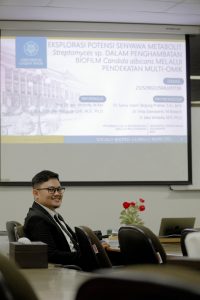
Name: Ismail
Email: ismail27@mail.ugm.ac.id
Promoter: Dr. Sylvia Utami Tunjung Pratiwi, S.Si., M.Si.
Co-Promoter 1: Dr. Ema Damayanti, M.Biotech.
Co-Promoter 2: Ir. Jaka Widada, M.P., Ph.D.
Research Title: Exploration of Potential of Metabolite Compounds of Streptomyces sp. in Inhibiting Biofilm of Candida sp. Through a Multi-Omics Approach
Seminars / Conferences Attended:
- UTAR Intervarsity Science Symposium 2025 (UISS2025)
- International Conference on Life Sciences and Biotechnology (ICOLIB 2025)

Name: Nur Fitriana Muhammad Ali
Email: nurfitrianamuhammadali@mail.ugm.ac.id
Promoter: Dr. Sylvia Utami Tanjung Pratiwi. M.Si.
Co-Promoter 1: Dr.rer.nat. apt. Yosi Bayu Murti, M.Si.
Co-Promoter 2:Dr. Tri Rini Nuringtyas, S.Si., M.Sc.
Research Title: The potential of local plants from Kendari as antifungal and antibiofilm agents

Name: Dini Astika Sari
Email: dini.astika.s@mail.ugm.ac.id
Promoter: Prof. Dr. Yekti Asih Purwestri, M.Si.
Co-Promoter 1: Prof. Dr. Ir. Siwi Indarti, MP.
Co-Promoter 2: Dr. Tri Rini Nuringtyas, S.Si., M.Sc.
Research Title: Analysis of Nematode Tolerance Mechanism of Robusta Coffee through OMICs Approaches

Name: Nunung Eni elawati
Email: nunungenielawati@mail.ugm.ac.id
Promoter: Prof. Ir. Irfan Dwidya Prijambada, M.Eng., Ph.D.
Co-Promoter 1: Muhammad Saifur Rohman, S.P., M.Si., M.Eng., Ph.D
Co-Promoter 2: Dr. rer. nat Andri Frediansyah, M.Sc (BRIN)
Research Title: Metagenomic and Metabolomic Study of Oyek
Research Abstract:
Read Abstract
Oyek is a traditional fermented food made from cassava that has potential as a functional food source. However, its utilization remains limited due to undesirable flavor characteristics and relatively low nutritional value. Fermentation is a complex biological process involving dynamic interactions between microbial communities and their metabolites, which directly influence the sensory and nutritional qualities of the final product. The integration of metagenomic and metabolomic approaches provides a comprehensive framework to elucidate these mechanisms. The metagenomic approach enables the identification of microbial diversity, abundance, and functional potential during oyek fermentation, including unculturable microorganisms. Meanwhile, untargeted metabolomics based on High-Resolution Mass Spectrometry (HRMS) allows the characterization of primary and secondary metabolites generated throughout the fermentation stages. The integration of both datasets is expected to reveal correlations between microbial dynamics and the formation of bioactive metabolites that contribute to enhanced flavor, aroma, and bioactivity, such as antioxidant potential. The outcomes of this study are anticipated to identify key microorganisms and biomarker metabolites responsible for improving the quality and functionality of oyek. Ultimately, this research aims to provide a scientific basis for developing advanced fermentation strategies through a multi-omics approach, contributing to the improvement and valorization of Indonesia’s traditional fermented foods in a sustainable and innovative manner.

Name: Widyandani Sasikirana
Email: widyandani.sasikirana@mail.ugm.ac.id
Promoter: Prof. Dr.rer.nat. apt. Raden Rara Endang Lukitaningsih, S.Si., M.Si.
Co-Promoter 1: Prof. dr. Sofia Mubarika Harjana, M.Med.Sc., Ph.D.
Co-Promoter 2: Dr.rer.nat. Risky Oktriani, S.Si., M.Biotech., M.Sc.
Research Title:
Drug Reposition Design Based on Transcriptomics-Metabolomics Integration Study in Colorectar Cancer

Name: Arsyam Mawardi
Email: arsyammawardi@mail.ugm.ac.id
Promoter: Prof. drh. Widya Asmara, S.U., Ph.D.
Co-Promoter 1: Prof. dr. E. Elsa Herdiana Murhandarwati, M.Kes, Ph.D.
Research Title: Development of Multiplex Loop-Mediated Isothermal Amplification (m-LAMP) and Lateral Flow Assay Diagnostic Methods for Detecting Malaria in Papua Province, Indonesia
Seminars / Conferences Attended:
- International Conference on Biodiversity, 14 June 2025
- The 6th International Conference on Bioinformatics, Biotechnology, and Biomedical Engineering (BioMIC 2025), 30 July 2025

Name: Abajaidun Mahulauw
Email: abajaidun.mahulauw@mail.ugm.ac.id
Promoter: Prof. Ir. Alva Edy Tontowi, M.Sc., Ph.D., IPU.ASEAN Eng.
Co-Promoter 1: Prof. Dr. drg. Siti Sunarintyas, M.Kes.
Co-Promoter 2: Dr. Tri Rini Nuringtyas, M.Sc.
Research Title: Development of Bone Tissue Engineering Scaffold with a Combination of Hydroxyapatite from Ruditapes variegatus shell and collagen-sericin enriched with Zingiber officinale var. rubrum rhizome extract as an anti-inflammatory agent
Research Abstract:
Read Abstract
Bone damage results in the discontinuity of the bone, thus requiring further treatment to restore its functional properties. Fracture treatments so far have used natural bone grafts in the form of Allograft, Xenograft, and Autograft, but they have various drawbacks. The development of bone tissue engineering through the implementation of composite materials offers an alternative to overcome the limitations of bone grafts. The selection of the type of biomaterial is a determining factor for the success of tissue engineering before it is formed into a scaffold. This research will develop a scaffold based on hydroxyapatite, collagen, sericin, and red ginger rhizome extract (Zingiber officinale var. rubrum). The selection of hydroxyapatite and collagen is based on their similarity to the nanostructure of natural bone. Hydroxyapatite is first synthesized from Ruditapes variegatus clam shells. Sericin in the scaffold acts as a protein compound that can increase the expression of osteogenic markers, while ginger extract can reduce the inflammatory reaction. The objective of this research for the development of the HA-Col-SS composite biomaterial as a bone tissue engineering scaffold is: To identify the characteristics of hydroxyapatite (crystallinity, functional groups, and Ca/P ratio) synthesized from Ruditapes variegatus clam. To identify the characteristics of the biocomposite scaffold developed from hydroxyapatite, collagen, and sericin enriched with Zingiber officinale var. rubrum rhizome extract. To analyze the effect of the biocomposite scaffold on MSC viability and the expression of osteoblast differentiation marker genes. To analyze the effect of the biocomposite scaffold on the inflammatory response in vitro. This laboratory experiment type of research will be conducted in several laboratories at Universitas Gadjah Mada. The research samples consist of 6 biocomposite scaffold groups, namely: HA.k-Col, HA-Col, HA-Col-Ser, HA-Col-Ser-Zin (5%), HA-Col-Ser-Zin (10%), and HA-Col-Ser-Zin (15%). The research consists of 3 stages: Stage I focuses on the synthesis of hydroxyapatite from Ruditapes variegatus shells. Stage II consists of scaffold fabrication and physicochemical characterization (XRD, FTIR, SEM/EDX, and wettability test). Stage III is the biocompatibility test, which includes testing the biocomposite scaffold on mesenchymal stem cell viability, osteogenic differentiation of mesenchymal stem cells into osteoblasts based on the marker genes RUNX2, sp7, and ATF4, and in vitro inflammatory response testing by studying the profile of inflammatory cytokines IL-6 and TNF- \alpha.